




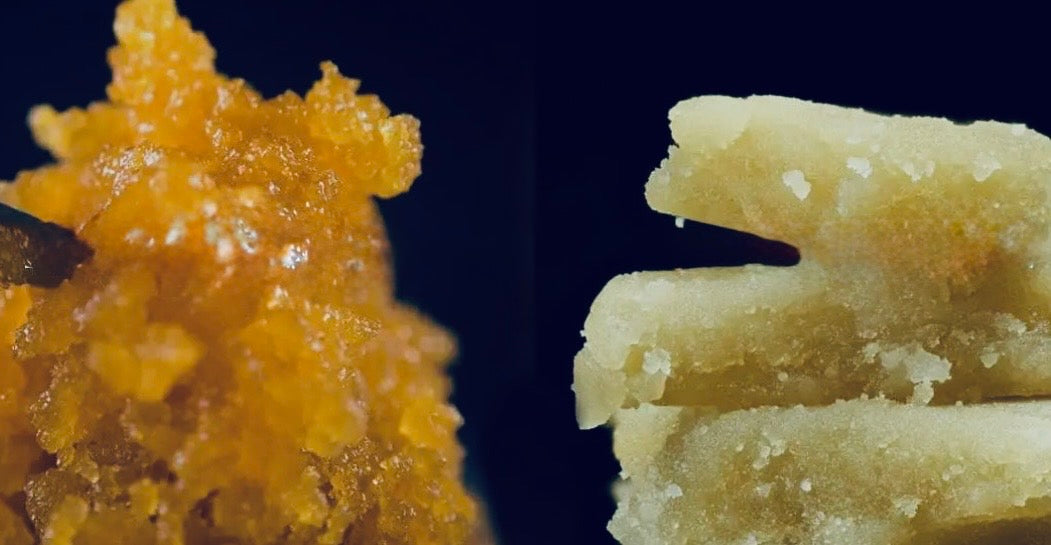
Resin vs. Rosin: Understanding the Difference Between Solvent and Solventless Concentrates
Resin vs. Rosin:
As cannabis concentrates continue to evolve, consumers are faced with more choices than ever. Terms like resin, rosin, cold-pressed, and heat-pressed are often used interchangeably, but they refer to very different extraction methods and end products. Understanding these distinctions can help consumers make informed decisions based on potency, flavor, purity, and personal preference.
What Is Resin?
Resin refers to the sticky, cannabinoid-rich trichomes naturally produced by the cannabis plant. In the concentrate market, the term most often appears as live resin, a concentrate created using solvent-based extraction methods.
Live resin is typically made from freshly harvested cannabis that is immediately frozen rather than dried and cured. Solvents such as butane or propane are used to separate cannabinoids and terpenes from the plant material. The result is a highly potent extract known for preserving much of the plant's original aroma and flavor profile.
Advantages of Resin
- High cannabinoid potency
- Strong terpene preservation
- Consistent large-scale production
- Wide variety of textures and formulations
Considerations
- Requires solvents during extraction
- Demands specialized equipment and post-processing
- Some consumers prefer solventless alternatives
What Is Rosin?
Rosin is a solventless cannabis concentrate produced using only pressure and heat. Instead of chemical solvents, rosin extraction mechanically squeezes oils from cannabis flower, hash, or kief.
Because no solvents are introduced, rosin has become popular among consumers seeking a cleaner and more natural extraction process. The quality of the starting material plays a significant role in determining the final product's flavor, potency, and yield.
Advantages of Rosin
- Solventless extraction
- Minimal processing
- Preserves natural cannabinoids and terpenes
- Appeals to consumers seeking a more natural concentrate
Considerations
- Lower yields compared to many solvent-based methods
- Production can be labor-intensive
- Premium rosin products often command higher prices
Cold-Pressed vs. Heat-Pressed Rosin
Not all rosin is produced the same way. The amount of heat used during pressing can significantly affect the final product.
Cold-Pressed Rosin
Cold pressing generally uses lower temperatures, often between 120°F and 160°F (49°C–71°C), combined with pressure. The goal is to preserve delicate terpenes and volatile compounds that contribute to aroma, flavor, and the overall experience.
Because less heat is applied, cold-pressed rosin may produce:
- Richer terpene profiles
- More nuanced flavor
- Lighter color
- Lower yields
Many connoisseurs prefer cold-pressed rosin for its ability to showcase the unique characteristics of a particular strain.
Heat-Pressed Rosin
Heat pressing typically utilizes higher temperatures, often between 170°F and 220°F (77°C–104°C), to increase extraction efficiency.
Higher temperatures can:
- Increase yields
- Shorten processing times
- Create a more stable consistency
- Potentially reduce some terpene content
While some aromatic compounds may be diminished, heat-pressed rosin often delivers excellent potency and greater production efficiency.
Which Is Better?
There is no universally "better" option—only different priorities.
If maximum potency and large-scale consistency are most important, resin products may be appealing. If a solventless extraction process and minimal processing are top priorities, rosin may be the preferred choice.
Similarly, cold-pressed rosin tends to emphasize flavor and terpene preservation, while heat-pressed rosin often prioritizes yield and production efficiency.
Final Thoughts
The growing popularity of cannabis concentrates has introduced consumers to a wider range of extraction methods than ever before. Resin and rosin may sound similar, but they represent fundamentally different approaches to concentrate production. Likewise, cold pressing and heat pressing offer unique advantages that can influence flavor, potency, and overall experience.
By understanding how each product is made, consumers can better select concentrates that align with their preferences—whether that's maximum terpene expression, solventless purity, higher potency, or production efficiency.